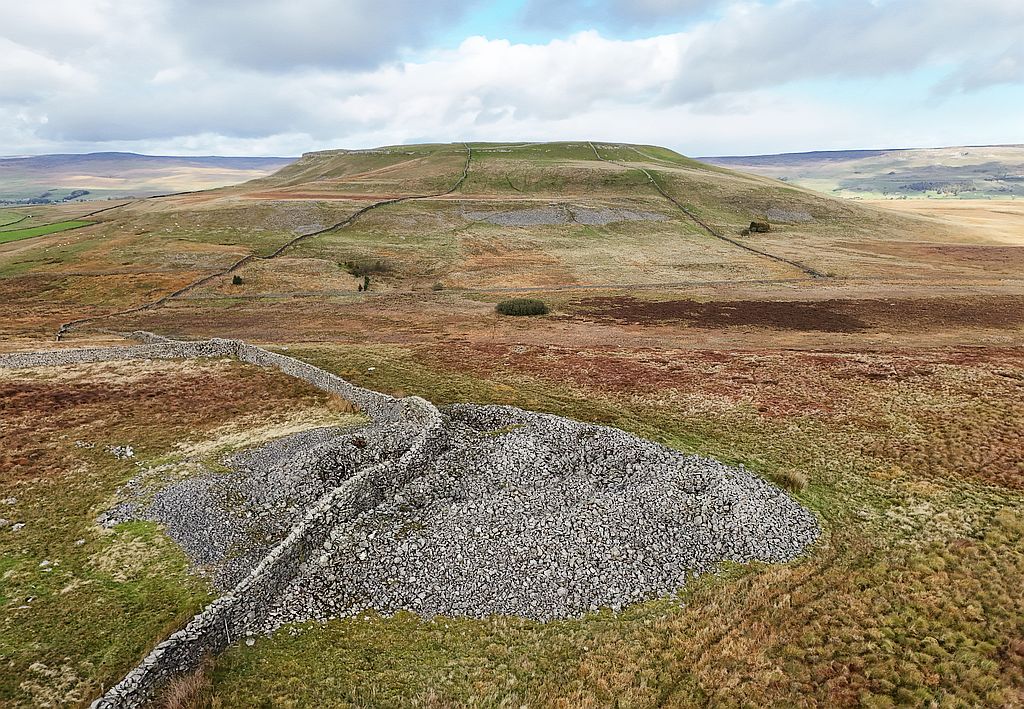
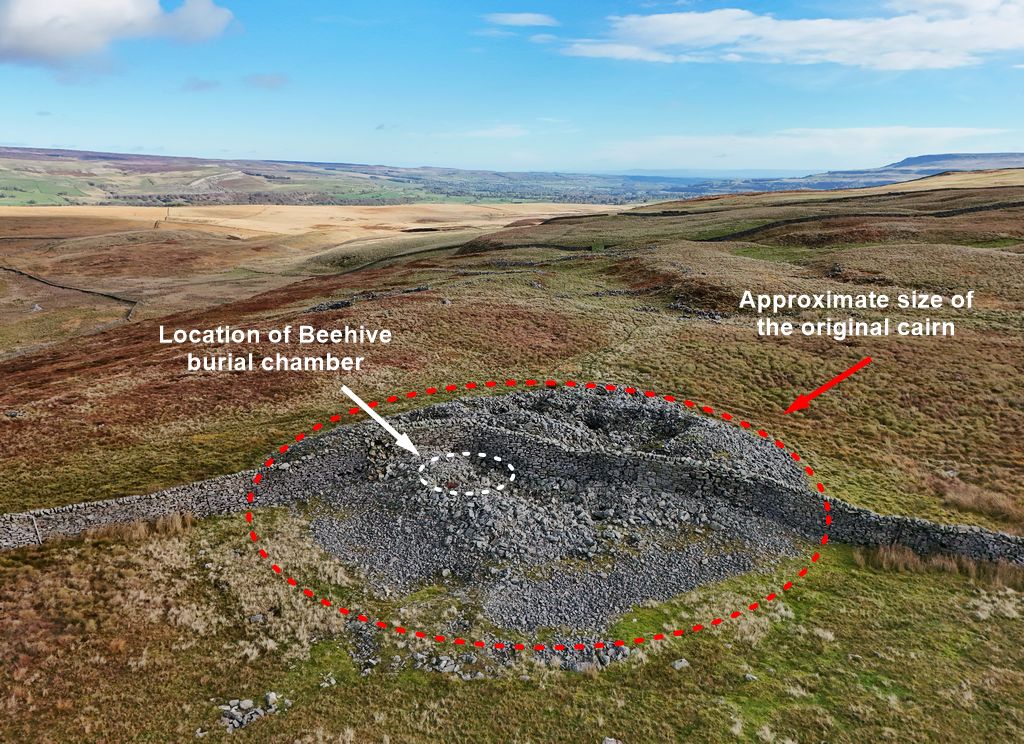
A visit to Addlebrough Hill in Wensleydale back in 2023 (see this post) also took in the Bronze Age burial cairn known as ‘Stony Raise’, which is located 1.2km to the south of the hill. Burial cairns are generally quite small piles of stones, so It was something of a shock on approaching the Stony Raise to find such a huge mound. This ancient cairn was used to mark the boundary between the parishes of Thornton and Bainbridge, and so today a dry stone wall runs over the mound following this boundary line. Although the cairn is much disturbed, the sheer amount of stone on the site points to this once being a significant and impressive monument.
Unfortunately this ‘giant’ cairn has been plundered for its stone in the past, and further pulled apart by people searching for the treasure which it was once believed to contain. The local tradition was that a chest of gold was buried within the mound, but it was protected by the ghost of an ancient chieftain or a demon which appeared as a large hen. Charles Fothergill noted In his diary (for the year 1805) that many cart loads of stone had already been removed from the cairn, and that 2 men had spent 33 days digging into the mound in the mid 1700’s hoping to find the treasure, but they only found a burial chamber containing a few human remains. Fothergill wrote …..
“About 50 years ago two labouring men, slaters, being poor and having little to do, they were brothers, one night set about a search after the gold; when they had got about half way through the labour they recollected it was said that a large clucking hen, the devil without doubt, sat upon the treasure to guard it; this being the case they were alarmed and stopped their work ’till they could get the assistance of a wise man who resided at Baynbridge to help them. The secret was imparted to him and provided with a large mysterious book to read in whilst the men worked, they all repaired to the spot; the men worked and the wise man read ’till they got nearly to the bottom of the tumulus, here called stone-raise, when suddenly all the stones began to shake and rattle in such a terrific manner that the men stood appalled and did not dare to proceed in the work ’till a considerable time elapsed, when with fear and trembling and every moment expecting the clucking hen, they got to the bottom; but instead of gold only found a small hollow place containing several human teeth and a large bead, probably an amulet or charm: no other bones appeared; maybe they had either been burned or perished thro’ time. The man who told my uncle this circumstance was on the spot and he declared that the stones as certainly shook as he was a living man.
This apparently true account paints quite a strange picture – with the village wise man reading from a mysterious book in order to protect the diggers from a supernatural guardian, and the stones of the cairn shaking around them as they got near the burial chamber. The fear of disturbing ancient burial mounds is a common piece of folklore, and the services of a wise man or woman are known to have been employed by those determined to dig into them. The shaking and rattling of the stones is likely explained by parts of the mound becoming unstable and collapsing as they dug down through it.
Abused Archaeology
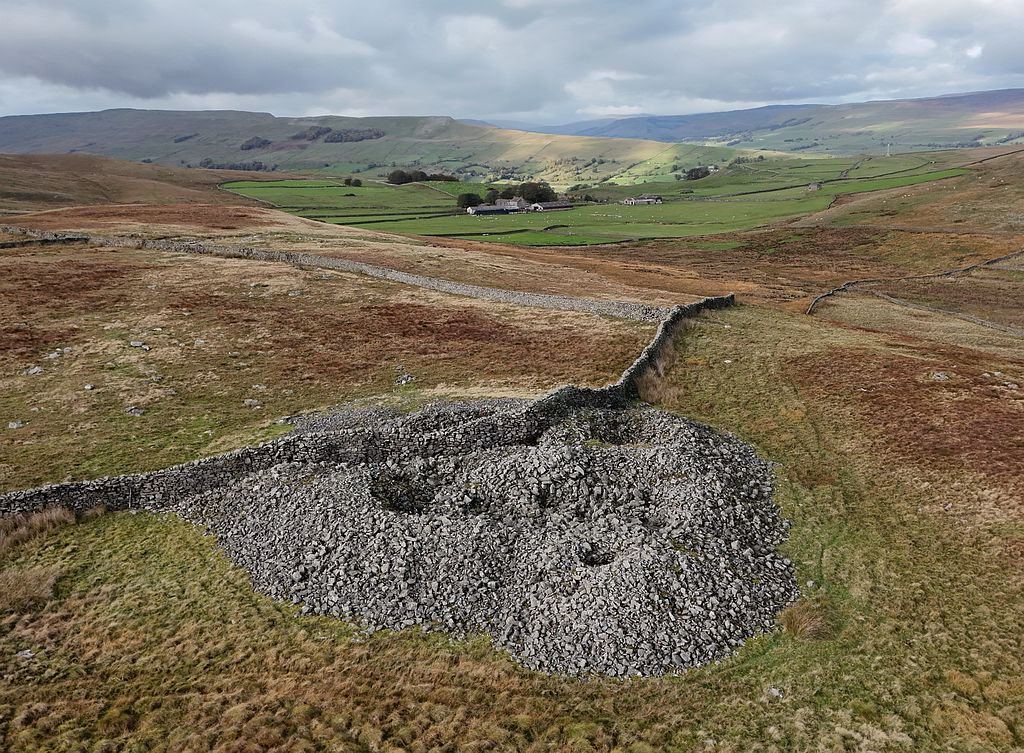
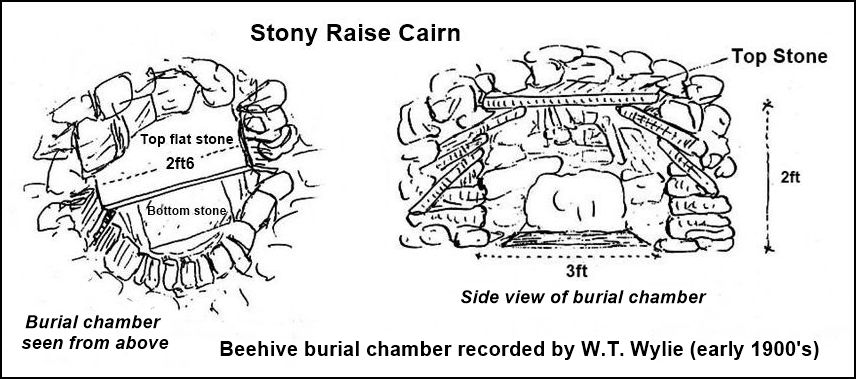
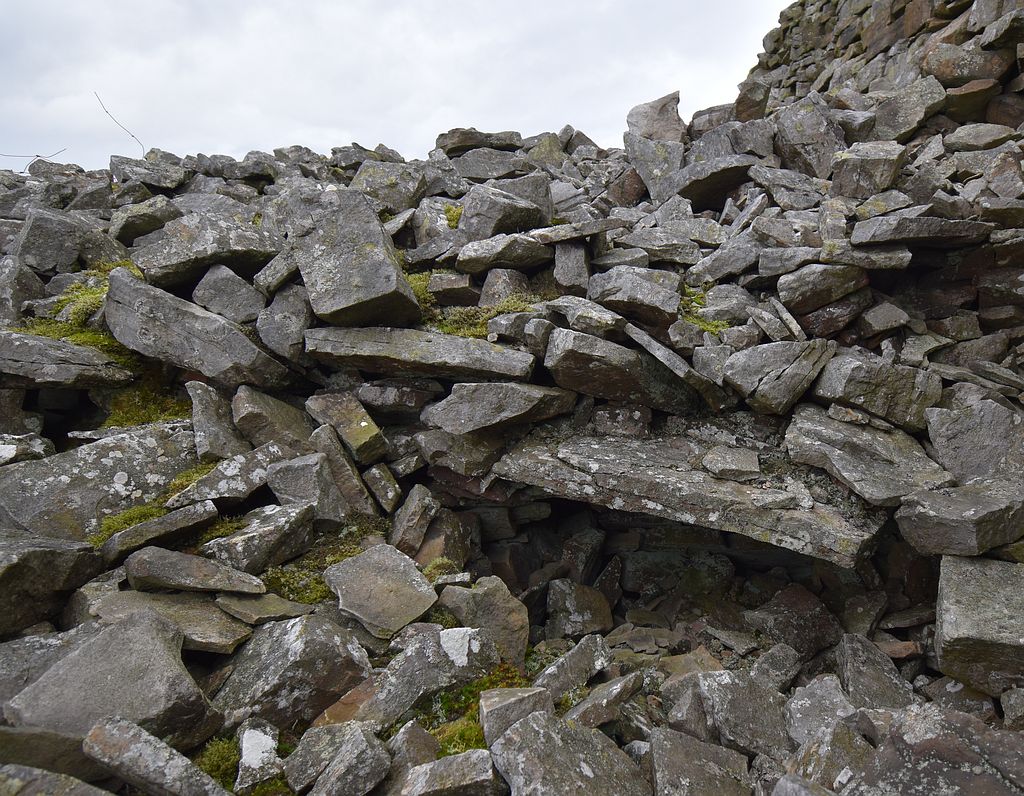
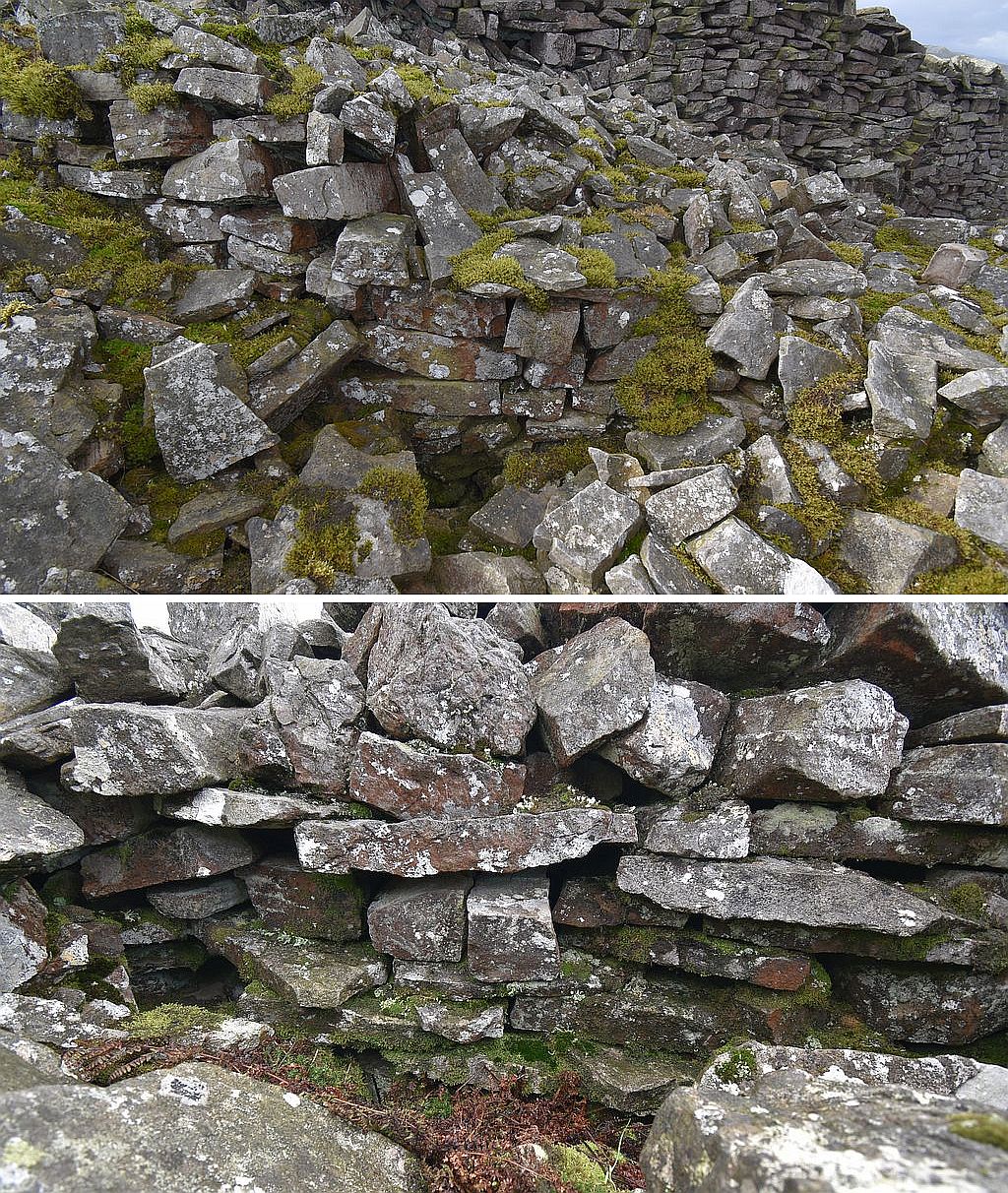
Looking around the cairn today, the damage done by past ‘explorers’ is very obvious. There are several holes dug down into the mound by those searching for the treasure, and this has exposed what seem to be the partial remains of at least 3 burial chambers, which at one time would have been deep within the cairn. These chambers were originally constructed with neat dry stone walling, and covered by stone slabs, with at least one chamber being a ‘beehive’ type structure with a corbelled roof – as recorded by W.T. Wylie in the early 1900’s (see image below).
The reference to cartloads of stone being removed from the cairn appears to be true – at least on the Bainbridge side of the boundary wall where the mound is noticeably reduced. Here, a spread of small stones around the edge of the cairn suggests that this is the unwanted material left behind after all the larger stones had been removed for buildings and field walls etc. Although the top of the cairn is much disturbed on the Thornton side of the wall, the larger stones do extend to its edge, and give an impression of how it may have originally looked.
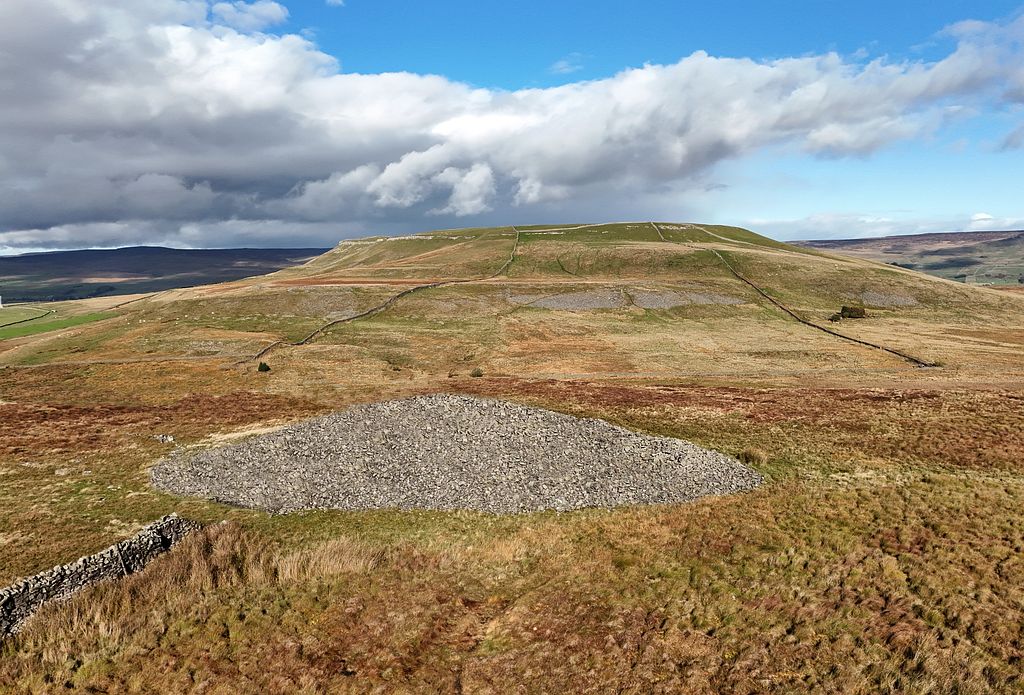
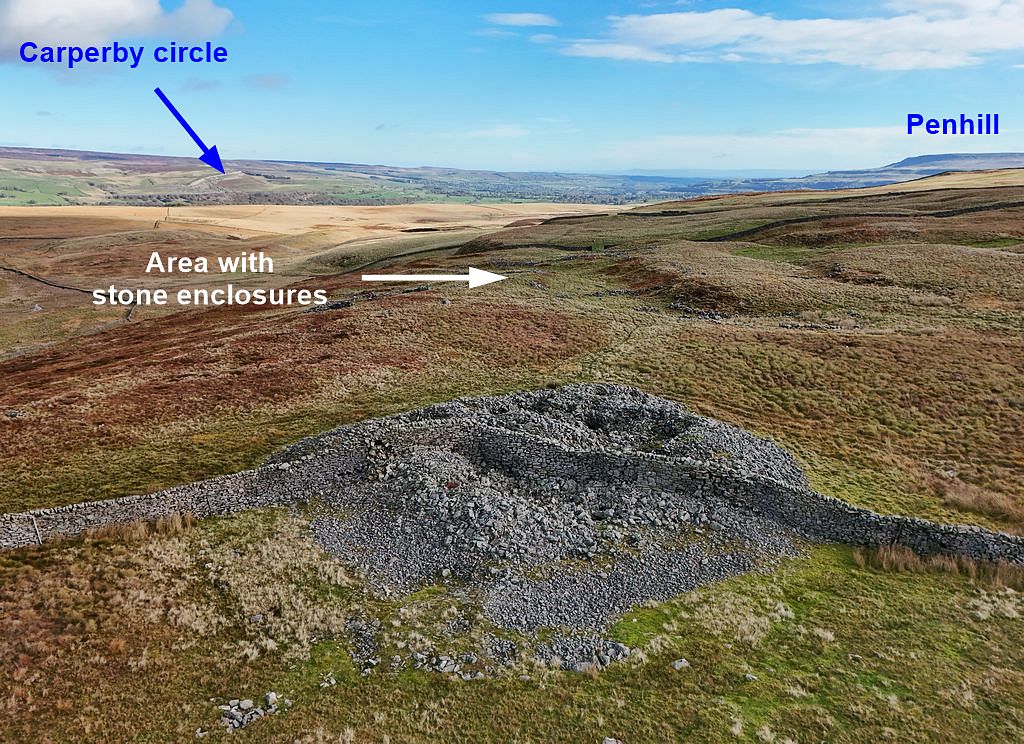
The prominent view of Addlebrough hill from the Stony Raise suggests that this may have been part of the reason for building the cairn in that location. Penhill also stands out conspicuously when looking eastward down Wensleydale, and across the valley can be seen Ivy Scar above the Carperby stone circle.
It seems likely that the Stony Raise also had some connection with a series of walled enclosures just to the east of the cairn. This sunken area may have also been the location where stone was quarried for the cairn.
Reference
Laurie & Millett, (1993) Wensleydale Report
Romney, Paul (ed.), (1984) The Diary of Charles Fothergill, 1805.
Stony Raise on the Northern Antiquarian

