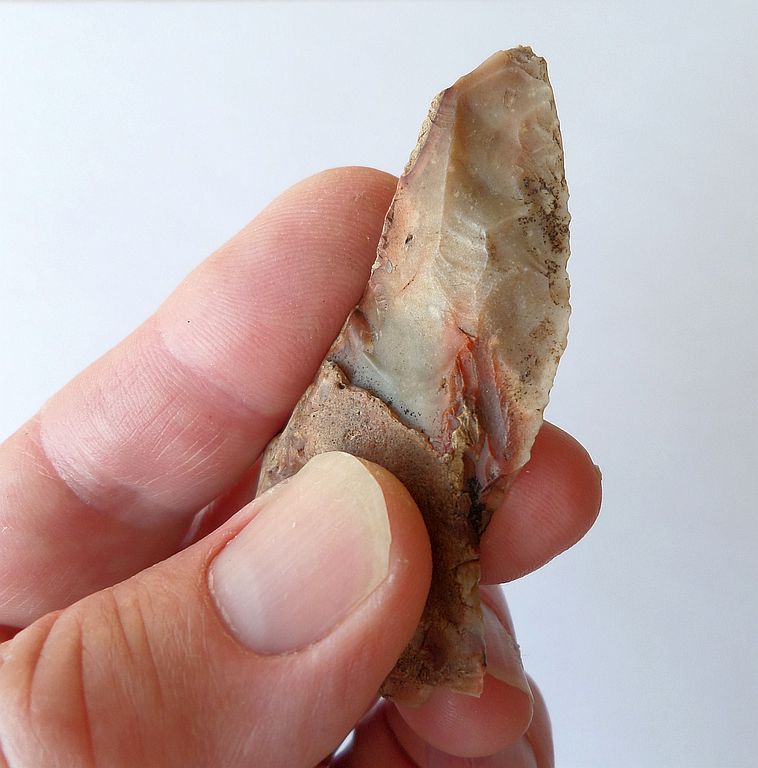
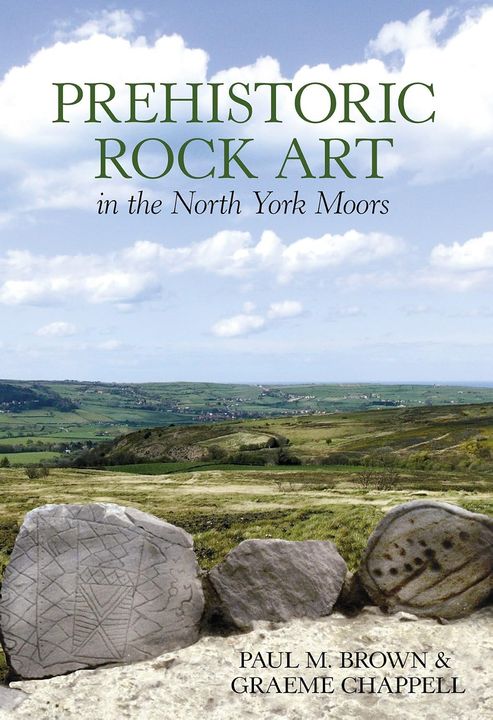
A recent post (Gifts from the Past) described finding two knapped flints on the John Cross Rigg moors after the big fire there in 2025. Finding those flints reminded me of another flint tool discovered on the Stoupe Brow Moors back in 2013. By coincidence Stoupe Brow can be seen from John Cross Rigg (it being located 3 miles to the east), and like John Cross Rigg it was also the scene of a massive moorland fire which burnt off all the vegetation back in 2003. That fire revealed hundreds of Cup and Ring marked rocks, which the late Paul Brown and myself included in a book about the Rock Art on the North York Moors. Ten years after the fire all the vegetation had grown back, and so i returned to the Stoupe Brow area to see if it was still possible to locate some of the carved rocks.
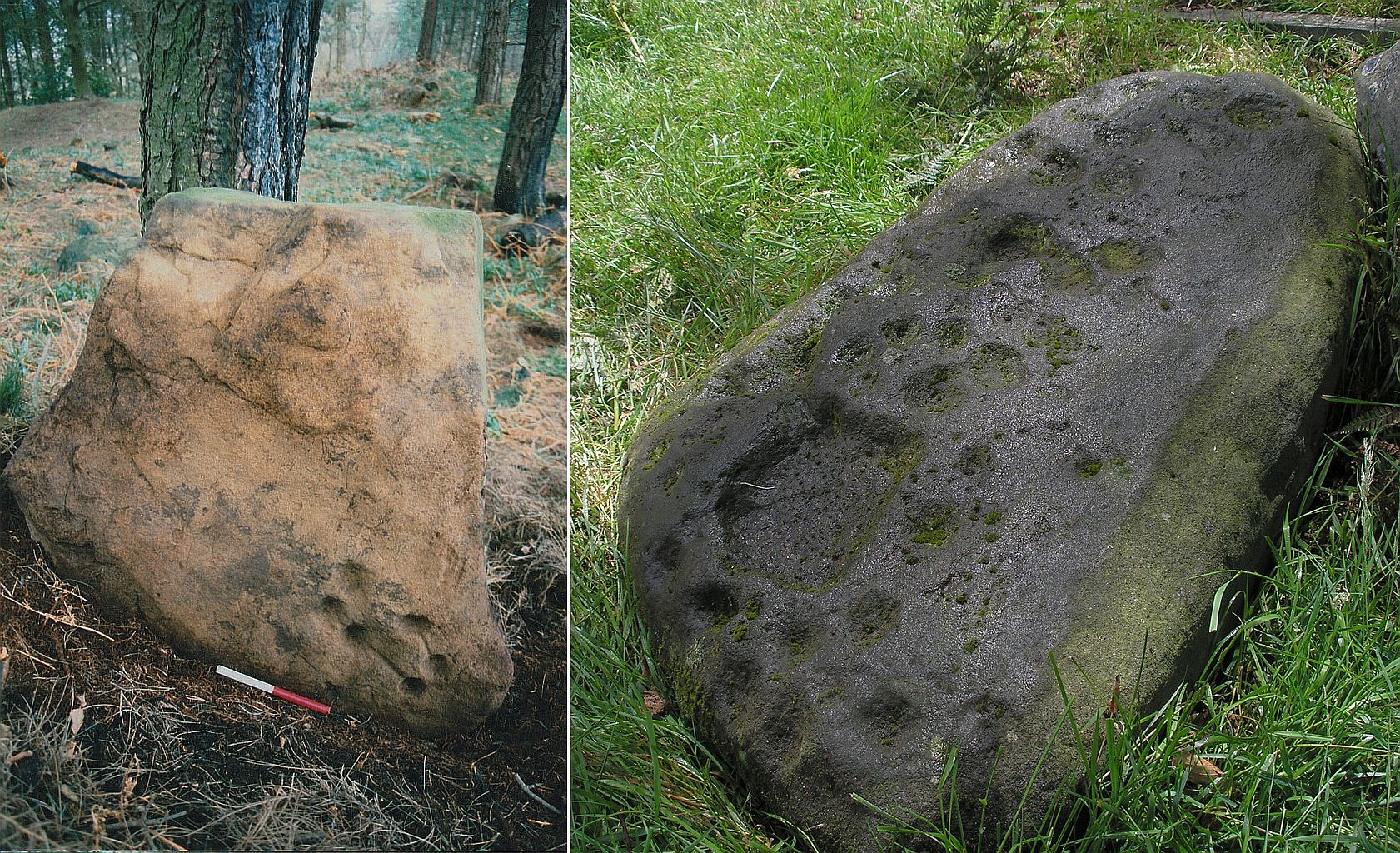
On this visit i spotted several faint cup marks on a rock which seemed not to have been recorded in the survey work that had taken place 10 years earlier. As well as the eroded cup marks i also noticed a ‘U’ shaped groove cut into the side of the rock, so i decided to take a photo. To better see the grooves i pulled a clump of heather away from the rock, and this revealed a piece of white flint in the soil at the base of the stone. Potentially this was an important find, as flint tools have been found at other rock art sites, with one suggestion being that they were used to pick out the design of the carvings. So there was a dilemma – should i remove the flint for safe keeping, or should i leave it in place and report it to the archaeologists? In the end i photographed it in situ and then removed it, which revealed that it was in fact a worked piece of flint made into a cutting tool.
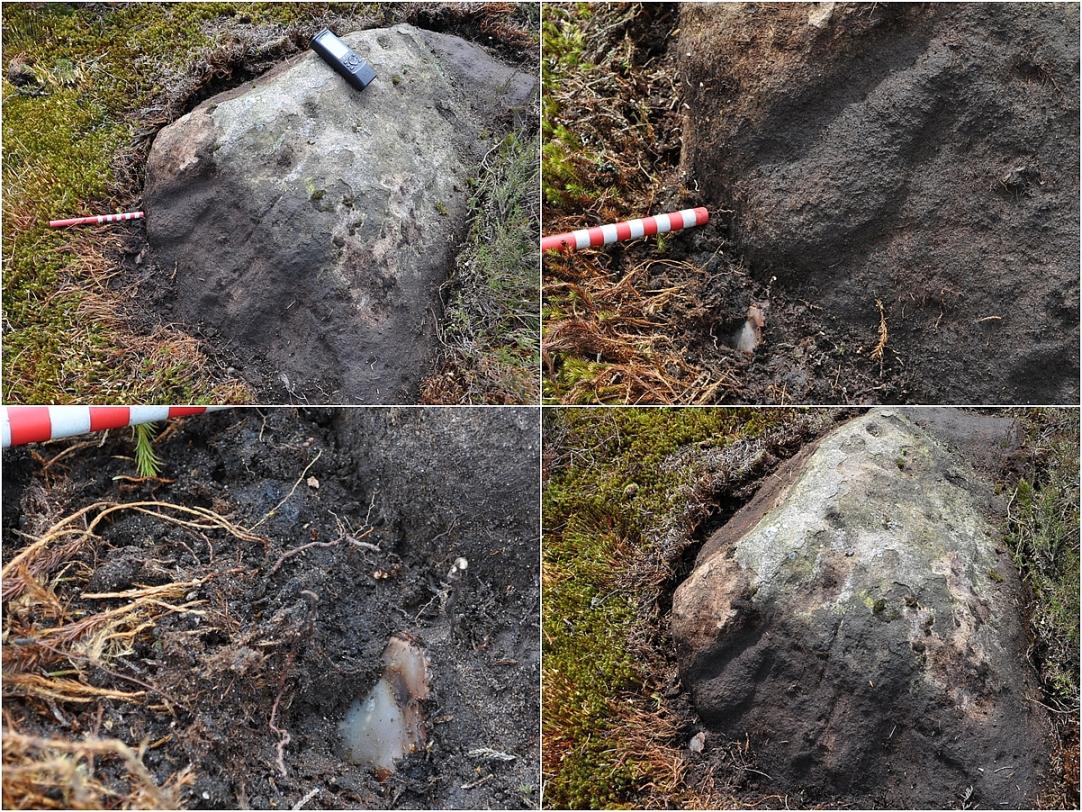
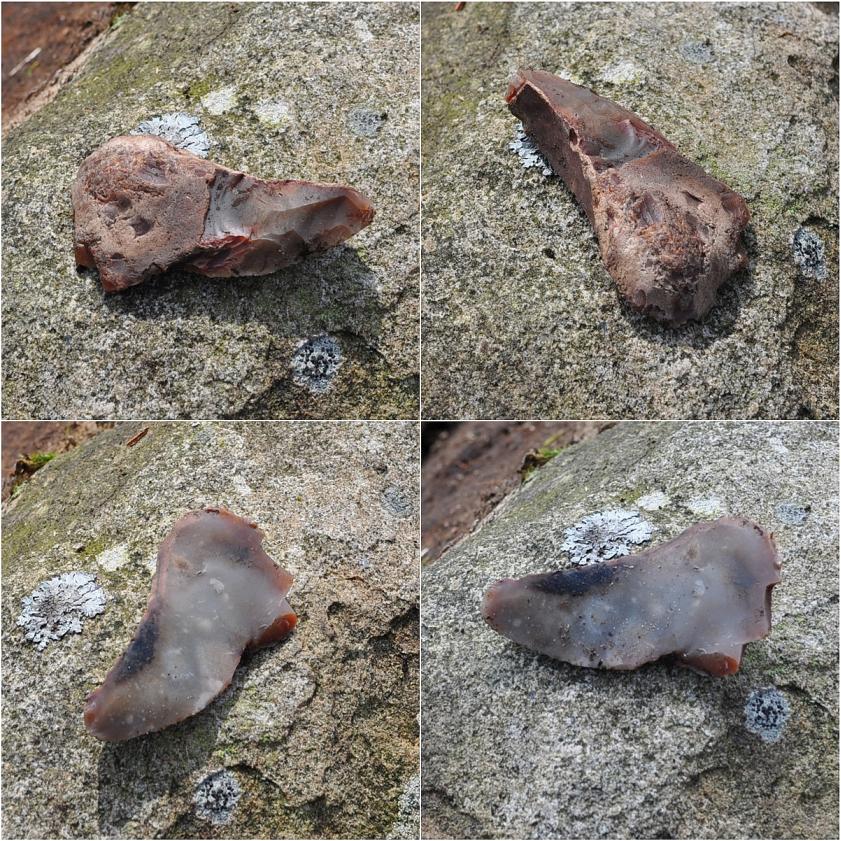
What was interesting is that this flint tool did not appear to have just been dropped on the ground, but instead it had been pushed point downwards into the earth where the 2 grooves on the side of the rock met the soil surface. So the impression was that it had been placed there intentionally, perhaps to be used at a later date. At the time i did wonder if the top of the rock had been used as a makeshift work surface, maybe for cutting up hunted game or some other activity.
Some other activity?
The meaning or purpose of cup marked stones (and British rock art in general) is still something of a mystery. While the majority of these ancient carvings are to be found on natural boulders and rock outcrops out in the landscape, the only hint as to their meaning is that they can also be found within burial mounds and on standing stones. This suggests that the carvings had some connection with sites of ritual activity, while the association with burials shows that they were also linked with the dead in some way, and perhaps beliefs about the afterlife. The Stoupe Brow Moors have several large burial mounds, cairn circles, and clusters of smaller cairns, with the cup and ring marked rocks spread across the moorland around them.
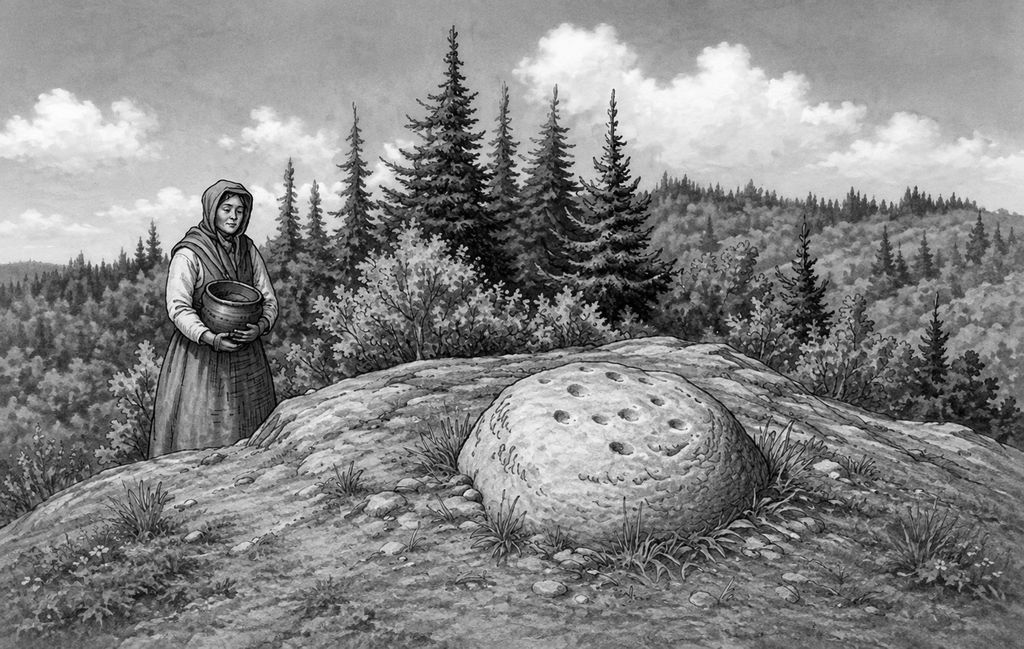
Cup marked stones are found across much of Northern Europe, and in later times folklore traditions regarded them as holy or sacred stones. Referred to as Offersten, Opferstein, Schalensteine, and Alvkvarnar, these stones were the location for folk rituals which involved leaving offerings in the cup marks in the form of milk, butter, grain, meat, and fat, etc. The belief was that these offerings would promote the health and fertility of animals, crops, and people in the area, as well as providing general ‘good luck’ for those making the offerings. This kind of folklore can be traced back to much older beliefs about powerful spirits residing in the local landscape, who could help or hinder the people living there. Although in later times these were regarded as nature spirits, elves or the fairy folk, it is thought that originally these were the spirits of deceased ancestors who dwelt in certain special locations, such as prominent boulders, rock outcrops, and waterfalls, and could have a positive or negative impact on the living. This perhaps brings us back full circle to the cup marked stones associated with burial mounds, and the dead who dwelt within them, along with the idea that the ancient cup marks were seen as a link to the world of spirits.